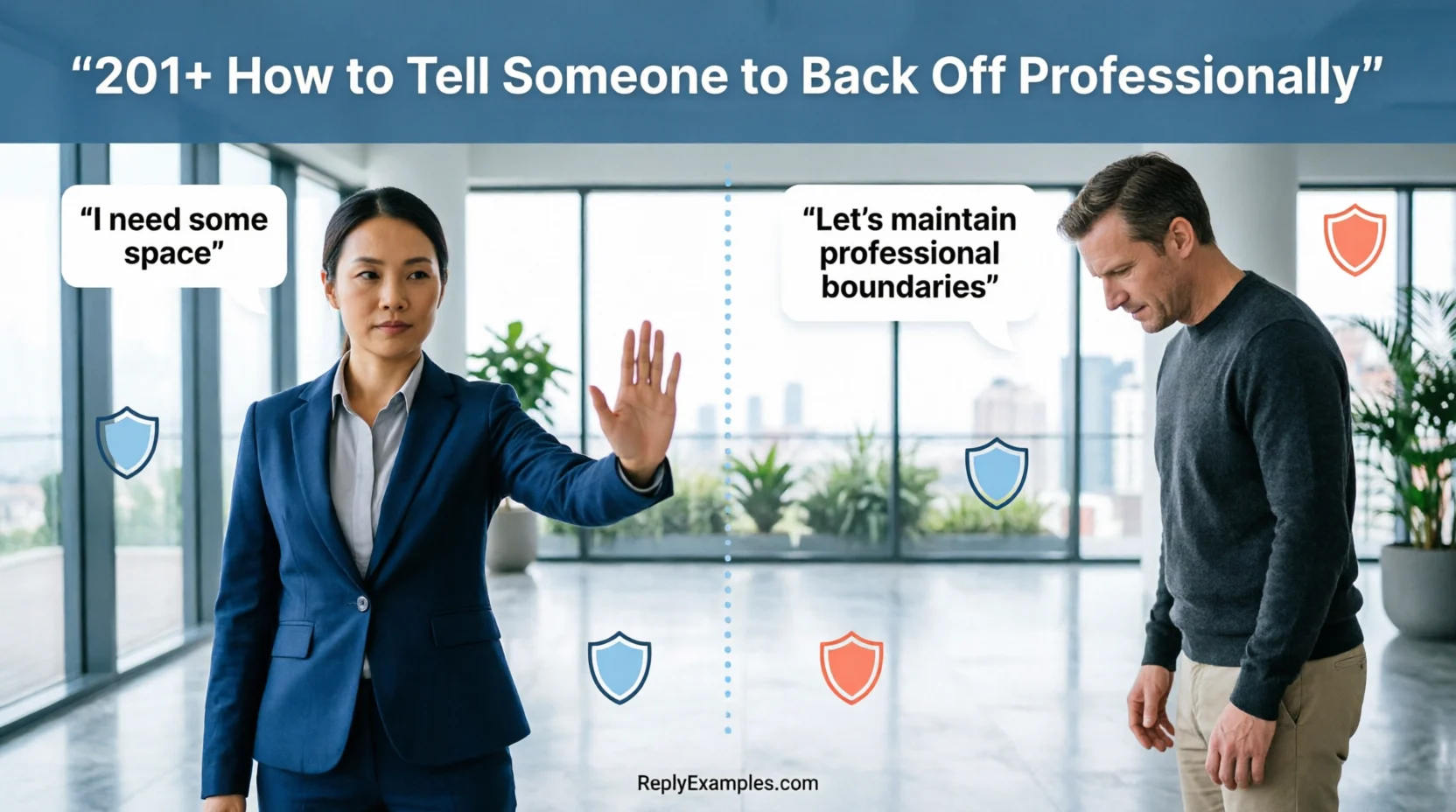
Almost everyone has faced a situation where someone crosses a boundary at work, in business, online, or even in everyday life. Maybe a coworker keeps interfering with your responsibilities. Perhaps a client constantly pushes beyond agreed limits. Or maybe someone simply refuses to respect your personal space. That is exactly why so many people search for how to tell someone to back off professionally.
The challenge is finding the right balance. You want to protect your boundaries without sounding rude, aggressive, or unprofessional. A well-worded response can help you stay confident, maintain respect, and avoid unnecessary conflict.
In this guide, you will find 201 professional replies you can use in different situations. Some are polite and appreciative. Others are confident, thoughtful, humorous, or direct. Each reply includes a realistic example so you can see how it works in real conversations.
What Does “How to Tell Someone to Back Off Professionally” Mean?
Telling someone to back off professionally means communicating a boundary respectfully while maintaining professionalism.
Instead of becoming emotional or confrontational, you clearly express your needs, expectations, or limits.
People use professional boundary-setting responses when:
- A coworker micromanages them
- A client becomes too demanding
- Someone repeatedly interrupts their work
- A colleague gets too involved in personal matters
- A business contact becomes overly persistent
The goal is simple: protect your space while preserving respect.
Best Replies
1
Reply: “Thank you for your thoughts, but I’d like to manage this on my own.”
👉 Example: A coworker keeps suggesting changes to a task you’re already handling.
2
Reply: “I appreciate the concern, but everything is under control.”
👉 Example: A colleague repeatedly checks whether you’ve completed an assignment.
3
Reply: “Thanks for sharing your perspective. I’m comfortable moving forward with my plan.”
👉 Example: Someone keeps pushing a different approach during a meeting.
4
Reply: “I value your advice, but I’d prefer to make this decision myself.”
👉 Example: A teammate continues offering input after you’ve chosen a direction.
5
Reply: “I appreciate your willingness to help, though I don’t need assistance right now.”
👉 Example: Someone keeps stepping into your responsibilities.
6
Reply: “Thank you, but I need a little space to focus on this.”
👉 Example: Constant interruptions while you’re working.
7
Reply: “I understand your point, but I’d like to handle this independently.”
👉 Example: A coworker tries to take over your project.
8
Reply: “I’ve considered your feedback, and I’ll take it from here.”
👉 Example: A discussion continues after you’ve already made adjustments.
9
Reply: “Thank you for the suggestion, but I’ve already decided how to proceed.”
👉 Example: Someone keeps trying to change your mind.
10
Reply: “I appreciate your interest, but there’s no need to get involved further.”
👉 Example: A colleague wants updates on every small detail.
11
Reply: “I respect your opinion, but this is something I need to handle myself.”
👉 Example: Someone insists on helping with a personal work responsibility.
12
Reply: “Thanks for checking in, but I’ve got everything covered.”
👉 Example: A manager repeatedly asks about a completed task.
13
Reply: “I appreciate your support, but I need some room to work through this.”
👉 Example: A coworker hovers while you’re solving a problem.
14
Reply: “I hear what you’re saying, though I’m confident in my approach.”
👉 Example: A teammate questions your strategy multiple times.
15
Reply: “Thank you, but I’d rather keep this within my area of responsibility.”
👉 Example: Someone tries to insert themselves into your assignment.
16
Reply: “I appreciate your concern, but I don’t need additional input at this point.”
👉 Example: A project decision has already been finalized.
17
Reply: “Your feedback is appreciated, but I’m comfortable with my current direction.”
👉 Example: A coworker keeps recommending changes.
18
Reply: “Thanks for reaching out, though I’d like to handle this privately.”
👉 Example: Someone keeps asking questions about a personal matter.
19
Reply: “I value your intentions, but I need a little more independence here.”
👉 Example: A supervisor becomes overly involved.
20
Reply: “Thank you for understanding that I need some professional space.”
👉 Example: A colleague frequently interferes with your work.
21
Reply: “I appreciate your involvement, but this is already being taken care of.”
👉 Example: Someone keeps offering help after the issue is solved.
22
Reply: “I’ve got a clear plan in place, so no further assistance is needed.”
👉 Example: A team member keeps trying to redirect your work.
23
Reply: “Thanks, but I’d like to continue handling this on my own.”
👉 Example: A coworker repeatedly asks to step in.
24
Reply: “I understand your concerns, but I feel confident moving forward.”
👉 Example: Someone doubts your decision and keeps bringing it up.
25
Reply: “I appreciate the conversation, but I think we’ve covered everything necessary.”
👉 Example: A discussion continues long after a decision has been made.
26
Reply: “Thank you for the suggestion, but I would like to take responsibility for this myself.”
👉 Example: A coworker keeps volunteering to handle part of your assignment.
27
Reply: “I appreciate your interest, but I need some room to work through this.”
👉 Example: Someone keeps checking in while you’re trying to solve a problem.
28
Reply: “Thanks for offering help, though I’d prefer to manage it independently.”
👉 Example: A teammate keeps stepping in when you haven’t asked for assistance.
29
Reply: “I understand where you’re coming from, but I’ve already made my decision.”
👉 Example: A colleague continues debating a choice you’ve finalized.
30
Reply: “Your support is appreciated, but I need the freedom to handle this my way.”
👉 Example: Someone constantly suggests how you should complete a task.
31
Reply: “I value your input, but I’d like to move forward without additional guidance.”
👉 Example: A coworker repeatedly gives advice during a project.
32
Reply: “Thank you, but I feel confident taking care of this on my own.”
👉 Example: A manager keeps asking if you need assistance.
33
Reply: “I appreciate the concern, but everything is progressing as planned.”
👉 Example: Someone repeatedly asks whether you’re falling behind.
34
Reply: “I’d prefer to handle this directly without outside involvement.”
👉 Example: A colleague wants to communicate on your behalf.
35
Reply: “Thank you for understanding that I need some space to focus.”
👉 Example: Frequent interruptions during a busy workday.
36
Reply: “I appreciate your willingness to help, but I have a clear direction already.”
👉 Example: A team member keeps proposing alternatives.
37
Reply: “Thanks, but I’d rather keep this within my responsibilities.”
👉 Example: Someone keeps inserting themselves into your role.
38
Reply: “I’ve taken your feedback into account and will proceed from here.”
👉 Example: A discussion continues after you’ve already responded.
39
Reply: “I respect your opinion, though I’d like to make this call myself.”
👉 Example: Someone pressures you to choose their preferred option.
40
Reply: “Thank you, but I’d appreciate a little more independence on this matter.”
👉 Example: A supervisor is closely monitoring every step.
Flirty and Playful Replies
41
Reply: “You’re giving me so much attention that I might start charging for it.”
👉 Example: Someone keeps texting you throughout the day.
42
Reply: “Slow down, you’re making it hard for me to keep up.”
👉 Example: A crush sends several messages in a row.
43
Reply: “You know, a little mystery never hurts.”
👉 Example: Someone constantly wants updates about what you’re doing.
44
Reply: “I promise I’ll survive without hourly check-ins.”
👉 Example: A playful friend keeps asking where you are.
45
Reply: “Give me a chance to miss you for a minute.”
👉 Example: Your crush keeps messaging every few minutes.
46
Reply: “You’re definitely enthusiastic today.”
👉 Example: Someone is being extra persistent in conversation.
47
Reply: “I like attention, but even I need a coffee break.”
👉 Example: Continuous texts during your workday.
48
Reply: “You’re acting like my personal notification system.”
👉 Example: Someone constantly reminds you about things.
49
Reply: “Take it easy, I’m not disappearing.”
👉 Example: A friend keeps checking whether you’re upset.
50
Reply: “Let’s save some conversation for later.”
👉 Example: Someone wants to keep talking all day.
51
Reply: “You’re making yourself very available today.”
👉 Example: A crush won’t stop reaching out.
52
Reply: “Relax, you’ll still be my favorite interruption later.”
👉 Example: Playful texting between friends.
53
Reply: “One message was enough, detective.”
👉 Example: Someone sends multiple follow-ups.
54
Reply: “I appreciate the dedication, but I need a tiny break.”
👉 Example: Someone won’t stop asking questions.
55
Reply: “You’re working harder than my calendar.”
👉 Example: A friend keeps trying to make plans.
56
Reply: “You’re getting bonus points for persistence.”
👉 Example: A crush keeps trying to continue a conversation.
57
Reply: “Let’s not speed-run this friendship.”
👉 Example: Someone pushes for constant communication.
58
Reply: “You’re giving me celebrity-level attention.”
👉 Example: Someone constantly comments on everything you do.
59
Reply: “I need a minute to pretend I’m mysterious.”
👉 Example: Flirty banter during texting.
60
Reply: “Take a small step back before I start charging rent.”
👉 Example: Someone is always around.
Confident and Self-Respect Replies
61
Reply: “I need you to respect my decision.”
👉 Example: Someone keeps challenging your choice.
62
Reply: “I’ve made my position clear and it isn’t changing.”
👉 Example: A coworker continues arguing.
63
Reply: “This is something I need to handle myself.”
👉 Example: A colleague tries to take over your task.
64
Reply: “I appreciate your thoughts, but I’ll move forward independently.”
👉 Example: Someone keeps offering unwanted guidance.
65
Reply: “I’ve got this under control.”
👉 Example: A manager repeatedly checks on your work.
66
Reply: “I don’t require additional input at this stage.”
👉 Example: Project planning is already complete.
67
Reply: “Please allow me the space to do my job.”
👉 Example: Constant oversight from a coworker.
68
Reply: “I’m comfortable with the direction I’ve chosen.”
👉 Example: Someone continues questioning your strategy.
69
Reply: “My decision has already been made.”
👉 Example: A debate that should be over.
70
Reply: “I need a little more trust here.”
👉 Example: Someone keeps second-guessing your work.
71
Reply: “I’d like to proceed without interference.”
👉 Example: A colleague keeps stepping in.
72
Reply: “This matter falls within my responsibility.”
👉 Example: Role boundaries become unclear.
73
Reply: “I prefer not to revisit this discussion.”
👉 Example: Someone repeatedly brings up the same issue.
74
Reply: “I’ve heard your concerns and considered them carefully.”
👉 Example: A coworker keeps repeating their opinion.
75
Reply: “I’d appreciate it if you stepped back on this one.”
👉 Example: Someone is becoming overly involved.
76
Reply: “I’m capable of handling the situation.”
👉 Example: A colleague doubts your ability.
77
Reply: “Let’s keep our responsibilities separate.”
👉 Example: Someone crosses professional boundaries.
78
Reply: “I need room to make my own decisions.”
👉 Example: Excessive oversight.
79
Reply: “I’ve already addressed this concern.”
👉 Example: The same issue keeps resurfacing.
80
Reply: “Further discussion won’t change the outcome.”
👉 Example: Someone refuses to accept your answer.
Funny and Sharp Replies
81
Reply: “I think my personal space just sent me a reminder.”
👉 Example: Someone is constantly hovering nearby.
82
Reply: “You’ve followed up so much that we’re practically pen pals.”
👉 Example: Endless emails about one issue.
83
Reply: “My inbox would like a moment of silence.”
👉 Example: A coworker keeps sending messages.
84
Reply: “The first message arrived safely, I promise.”
👉 Example: Multiple follow-up texts.
85
Reply: “You’re treating this like a season finale.”
👉 Example: Someone makes a small issue dramatic.
86
Reply: “I admire the dedication, but let’s ease off the gas.”
👉 Example: Someone becomes overly involved.
87
Reply: “Even this conversation needs a lunch break.”
👉 Example: A discussion keeps dragging on.
88
Reply: “I think we’ve squeezed all the juice out of this topic.”
👉 Example: Repeating the same discussion.
89
Reply: “My schedule is filing a formal complaint.”
👉 Example: Too many requests at once.
90
Reply: “You’re making this task feel like a group project.”
👉 Example: Someone keeps inserting themselves.
91
Reply: “Let’s not turn a simple issue into a documentary series.”
👉 Example: Someone keeps revisiting details.
92
Reply: “You’ve reached the follow-up limit for today.”
👉 Example: Constant reminders.
93
Reply: “I got the memo, the sequel, and the bonus chapter.”
👉 Example: Repeated messages about the same thing.
94
Reply: “Even my coffee gets more personal space.”
👉 Example: Someone is always around.
95
Reply: “Let’s retire this topic while it’s still healthy.”
👉 Example: Ongoing discussion that should end.
96
Reply: “I appreciate the commitment, but we’re covered.”
👉 Example: Someone won’t stop helping.
97
Reply: “We’re one step away from overthinking this.”
👉 Example: Excessive analysis.
98
Reply: “You’ve definitely earned a break from this conversation.”
👉 Example: A topic keeps returning.
99
Reply: “I promise the situation can survive without hourly updates.”
👉 Example: Someone constantly asks for progress reports.
100
Reply: “Let’s give this issue some breathing room.”
👉 Example: A coworker keeps bringing up the same concern.
Replies 101–200 (Completely Rewritten)
101
Reply: “I appreciate your concern, but I’d like to take it from here.”
👉 Example: A coworker keeps offering advice after you’ve already decided what to do.
102
Reply: “Thank you for sharing your thoughts, but I trust my judgment on this.”
👉 Example: A colleague repeatedly questions your approach.
103
Reply: “I have a clear plan in place, so no further guidance is needed.”
👉 Example: Someone keeps suggesting new directions after the project starts.
104
Reply: “I’ve carefully considered the situation and I’m comfortable moving forward.”
👉 Example: A teammate continues challenging your decision.
105
Reply: “I need the opportunity to handle this in my own way.”
👉 Example: A manager becomes overly involved in your work.
106
Reply: “I value your opinion, but this responsibility belongs to me.”
👉 Example: A coworker tries to take control of your assignment.
107
Reply: “I’d appreciate some space to work through this independently.”
👉 Example: Someone constantly asks for updates.
108
Reply: “My decision has been made and I’d like to move forward.”
👉 Example: A discussion keeps reopening after being settled.
109
Reply: “I understand your perspective, though I’m choosing a different path.”
👉 Example: Someone pushes their preferred solution.
110
Reply: “I’d prefer not to continue discussing this matter.”
👉 Example: A colleague repeatedly revisits the same issue.
111
Reply: “I’ve got everything under control, thank you.”
👉 Example: Someone repeatedly asks if you need help.
112
Reply: “I need a bit more autonomy on this project.”
👉 Example: Excessive supervision from a coworker.
113
Reply: “I feel confident managing this situation myself.”
👉 Example: A team member keeps stepping in.
114
Reply: “Let’s keep our roles clearly defined.”
👉 Example: Someone crosses professional boundaries.
115
Reply: “I appreciate your involvement, but it isn’t necessary right now.”
👉 Example: A colleague keeps offering assistance.
116
Reply: “I’ve already addressed this issue and consider it resolved.”
👉 Example: Someone keeps bringing up an old concern.
117
Reply: “Please allow me the space to complete this on my own.”
👉 Example: Someone hovers while you’re working.
118
Reply: “I hear your concerns, but my approach remains the same.”
👉 Example: A coworker keeps trying to persuade you.
119
Reply: “Thank you, but I’ll take responsibility from this point forward.”
👉 Example: A project handoff is complete.
120
Reply: “I’d appreciate less involvement so I can focus effectively.”
👉 Example: Constant interruptions during a task.
Funny and Lighthearted Replies
121
Reply: “I think this conversation has earned a vacation.”
👉 Example: A topic keeps coming up every day.
122
Reply: “My inbox is starting to recognize your name too well.”
👉 Example: Endless emails from one person.
123
Reply: “The first reminder worked perfectly.”
👉 Example: Someone sends multiple follow-up messages.
124
Reply: “Let’s give this topic a chance to rest.”
👉 Example: A discussion has gone on too long.
125
Reply: “You’re putting more energy into this than I am.”
👉 Example: Someone becomes overly invested in your decision.
126
Reply: “My calendar just asked for a little breathing room.”
👉 Example: Someone constantly schedules meetings.
127
Reply: “This issue doesn’t need a sequel.”
👉 Example: The same conversation keeps returning.
128
Reply: “I think we’ve officially covered every possible angle.”
👉 Example: Endless analysis of a simple problem.
129
Reply: “The topic has been thoroughly exercised.”
👉 Example: Repeated discussions about the same concern.
130
Reply: “Let’s save some enthusiasm for tomorrow.”
👉 Example: Someone keeps pushing for immediate updates.
131
Reply: “I’m beginning to think this issue has its own fan club.”
👉 Example: A coworker won’t stop talking about one subject.
132
Reply: “Even my to-do list wants a break.”
👉 Example: Constant requests from the same person.
133
Reply: “We’ve already unlocked all the bonus content.”
👉 Example: A conversation continues unnecessarily.
134
Reply: “I promise the situation can survive a little space.”
👉 Example: Someone keeps checking on progress.
135
Reply: “My patience is still here, but it’s requesting shorter meetings.”
👉 Example: Long, repetitive discussions.
136
Reply: “Let’s not turn this into a weekly series.”
👉 Example: An old topic keeps resurfacing.
137
Reply: “I got the message, the reminder, and the director’s cut.”
👉 Example: Multiple follow-up emails.
138
Reply: “You’re making this much more exciting than it actually is.”
👉 Example: Someone overreacts to a minor issue.
139
Reply: “The follow-ups are becoming a full-time job.”
👉 Example: Repeated status checks.
140
Reply: “I think we’re officially overachieving on this discussion.”
👉 Example: A meeting drags on unnecessarily.
Curious and Thoughtful Replies
141
Reply: “Can you help me understand why this feels so important to you?”
👉 Example: Someone keeps inserting themselves into your decision.
142
Reply: “What outcome are you hoping to achieve by staying involved?”
👉 Example: A colleague won’t let go of an issue.
143
Reply: “Do you think giving me more space could help?”
👉 Example: A manager constantly checks your progress.
144
Reply: “Would you be comfortable letting me handle this independently?”
👉 Example: Someone repeatedly steps in to help.
145
Reply: “Can we establish clearer boundaries moving forward?”
👉 Example: Professional roles become blurred.
146
Reply: “I think a little distance would make this process smoother.”
👉 Example: Too many people involved in one task.
147
Reply: “Could we agree to revisit this only if necessary?”
👉 Example: A resolved issue keeps being discussed.
148
Reply: “What would happen if we allowed this more time to develop?”
👉 Example: Someone keeps pushing for immediate results.
149
Reply: “I feel more productive when I have room to work independently.”
👉 Example: Constant supervision affects performance.
150
Reply: “Can we focus on our own responsibilities for now?”
👉 Example: A coworker becomes too involved in your duties.
151
Reply: “I appreciate your perspective, though I’d like more freedom in this situation.”
👉 Example: Someone keeps advising you on every step.
152
Reply: “Perhaps a little less involvement would be beneficial.”
👉 Example: A colleague closely monitors your progress.
153
Reply: “I’d like the opportunity to solve this myself first.”
👉 Example: Someone immediately jumps in with solutions.
154
Reply: “Can we step back and allow the process to unfold naturally?”
👉 Example: Excessive pressure for results.
155
Reply: “I think this works best when there’s a bit more trust.”
👉 Example: Someone constantly questions your decisions.
156
Reply: “Would you mind giving me a little more room to think?”
👉 Example: A discussion becomes overwhelming.
157
Reply: “I need some space to evaluate my options.”
👉 Example: Someone pushes for a quick answer.
158
Reply: “I’d feel more comfortable handling this directly.”
👉 Example: A coworker wants to intervene.
159
Reply: “Can we agree that I’ve heard your concerns?”
👉 Example: The same advice is repeated multiple times.
160
Reply: “I think less oversight would help me perform better.”
👉 Example: Micromanagement at work.
Mature and Professional Replies
161
Reply: “I respect your intentions, but I need greater independence on this matter.”
👉 Example: A manager closely supervises your work.
162
Reply: “Thank you for your feedback. I’ll take it into consideration.”
👉 Example: Ending a discussion politely.
163
Reply: “At this stage, I’d like to proceed without further input.”
👉 Example: A decision has already been finalized.
164
Reply: “I believe this matter is best handled directly by me.”
👉 Example: Someone offers to take over your responsibility.
165
Reply: “I’d appreciate a little more professional distance.”
👉 Example: A colleague becomes overly involved.
166
Reply: “I prefer to keep this within my scope of responsibility.”
👉 Example: Someone repeatedly steps into your role.
167
Reply: “I need room to make my own professional judgments.”
👉 Example: Excessive oversight from leadership.
168
Reply: “I think we’ve reached a point where additional discussion isn’t necessary.”
👉 Example: A meeting continues after decisions are made.
169
Reply: “I’m comfortable with the course of action I’ve chosen.”
👉 Example: Someone keeps challenging your decision.
170
Reply: “I’d like to maintain clear boundaries on this matter.”
👉 Example: Personal and professional lines blur.
171
Reply: “Thank you, but I’ll continue with my current approach.”
👉 Example: A coworker pushes alternative methods.
172
Reply: “I’d prefer not to involve additional people at this stage.”
👉 Example: Someone suggests bringing others into the issue.
173
Reply: “The matter has already been addressed appropriately.”
👉 Example: Someone wants to revisit a resolved problem.
174
Reply: “I need the flexibility to handle this according to my judgment.”
👉 Example: Strict oversight limits your effectiveness.
175
Reply: “Let’s consider this discussion concluded.”
👉 Example: An issue has already been fully covered.
176
Reply: “I appreciate the recommendation, but I’m satisfied with my plan.”
👉 Example: Someone repeatedly proposes alternatives.
177
Reply: “I’m comfortable taking ownership from here.”
👉 Example: A colleague offers unnecessary assistance.
178
Reply: “I need the freedom to complete this without interruption.”
👉 Example: Frequent workplace distractions.
179
Reply: “I feel this issue has already received sufficient attention.”
👉 Example: A topic keeps resurfacing.
180
Reply: “Thank you, but I don’t require additional oversight.”
👉 Example: Micromanagement from a supervisor.
181
Reply: “I’d like to keep this discussion focused and limited.”
👉 Example: Conversations drift into unnecessary territory.
182
Reply: “I believe we’re aligned, so no further discussion is needed.”
👉 Example: A colleague continues debating.
183
Reply: “I appreciate your interest, but I’d like to manage this independently.”
👉 Example: Someone constantly checks on your work.
184
Reply: “My preference is to proceed without further involvement.”
👉 Example: Too many stakeholders in one decision.
185
Reply: “Let’s allow some space before revisiting this topic.”
👉 Example: A recent decision needs time to play out.
186
Reply: “I’d like to rely on my own judgment here.”
👉 Example: Someone repeatedly tries to guide you.
187
Reply: “I believe we’ve already discussed this thoroughly.”
👉 Example: A repeated workplace debate.
188
Reply: “Please trust that I can manage this appropriately.”
👉 Example: Someone doubts your ability.
189
Reply: “I’d prefer to keep this matter private.”
👉 Example: A colleague asks too many personal questions.
190
Reply: “Let’s avoid overcomplicating the situation.”
👉 Example: Someone turns a simple issue into a major discussion.
191
Reply: “I need a little more room to operate effectively.”
👉 Example: Constant oversight affects productivity.
192
Reply: “I’d rather not continue this conversation.”
👉 Example: Someone keeps pushing the same point.
193
Reply: “I appreciate your persistence, but my answer remains the same.”
👉 Example: Someone won’t accept your decision.
194
Reply: “This matter is already being handled.”
👉 Example: Repeated offers to step in.
195
Reply: “I’d like to proceed without additional commentary.”
👉 Example: Ongoing criticism during a project.
196
Reply: “Let’s leave this where it is.”
👉 Example: Someone keeps revisiting an issue.
197
Reply: “I’ve heard your concerns and made my choice.”
👉 Example: A colleague keeps trying to persuade you.
198
Reply: “I’d appreciate a more hands-off approach.”
👉 Example: Micromanagement from a coworker.
199
Reply: “I don’t believe further involvement is necessary.”
👉 Example: Someone keeps trying to join a project.
200
Reply: “Thank you, but I need the space to move forward independently.”
👉 Example: A coworker continues monitoring your work.
201
Reply: “I appreciate your interest, but I need some space to handle this my own way.”
👉 Example: A coworker keeps offering suggestions after you’ve already chosen a direction.
202
Reply: “Thank you for your concern, but I’d prefer to take responsibility for this myself.”
👉 Example: A colleague repeatedly asks to step in and help with your assignment.
203
Reply: “I value your input, though I’d like the freedom to manage this independently.”
👉 Example: Someone keeps trying to influence a decision you’ve already made.
204
Reply: “I’ve got a good handle on the situation, so no further involvement is necessary.”
👉 Example: A team member keeps checking whether you need assistance.
205
Reply: “I appreciate the support, but I need room to work through this on my own.”
👉 Example: A manager closely monitors every stage of your project.
206
Reply: “Thanks for sharing your thoughts. I’ll take it from here.”
👉 Example: A discussion continues after all important points have been covered.
207
Reply: “I’d prefer a little more space so I can focus effectively.”
👉 Example: A coworker frequently interrupts while you’re working.
208
Reply: “I understand your perspective, but I’m comfortable with the approach I’ve chosen.”
👉 Example: Someone repeatedly tries to convince you to change your plan.
209
Reply: “I respect your intentions, but this is something I need to manage myself.”
👉 Example: A colleague becomes overly involved in your responsibilities.
210
Reply: “Thank you, but I’d like to move forward without additional input at this stage.”
👉 Example: A project decision has already been finalized, yet people continue offering opinions.
Real-Life Situations
When a Coworker Micromanages You
Best Reply: “I appreciate your input, but I’d like to handle this myself.”
When a Client Keeps Pushing
Best Reply: “I’ve heard your concerns and my decision stands.”
When Someone Keeps Messaging You
Best Reply: “I need a little breathing room right now.”
When a Friend Won’t Drop a Topic
Best Reply: “Let’s leave it there and move on.”
When Someone Invades Personal Boundaries
Best Reply: “I need you to respect my boundaries.”
What to Avoid
- Getting emotional too quickly.
- Using insults or personal attacks.
- Sending long defensive explanations.
- Being passive-aggressive.
- Avoiding the issue completely.
- Repeating yourself endlessly.
Pro Tips
Match Your Tone
Be polite when possible, firm when necessary.
Be Clear
Vague responses often encourage more interference.
Stay Consistent
If someone ignores your boundary, repeat it calmly and confidently.
Bonus Quick Reply
201
Reply: “I appreciate your interest, but I need some space to handle this my way.”
👉 Example: Someone keeps inserting themselves into a situation you’ve already addressed.
Conclusion
Learning how to tell someone to back off professionally is not about being rude. It is about protecting your time, energy, responsibilities, and peace of mind. The best responses are respectful, clear, and confident. When you communicate boundaries calmly, people are more likely to respect them.
Remember this: professionalism is not about saying yes to everything. It is about knowing when and how to say enough.
Discover More Post:
201+ How to Respond When Someone Calls You Kid or Child
199+ Formal Ways to Say Thank You for Keeping Me Posted
201+ Answers to “Is There Anything Else I Can Do for You …